
Welcome to Lulua-Dubai Company
Discover Quality, Experience Excellence
Discover Quality, Experience Excellence
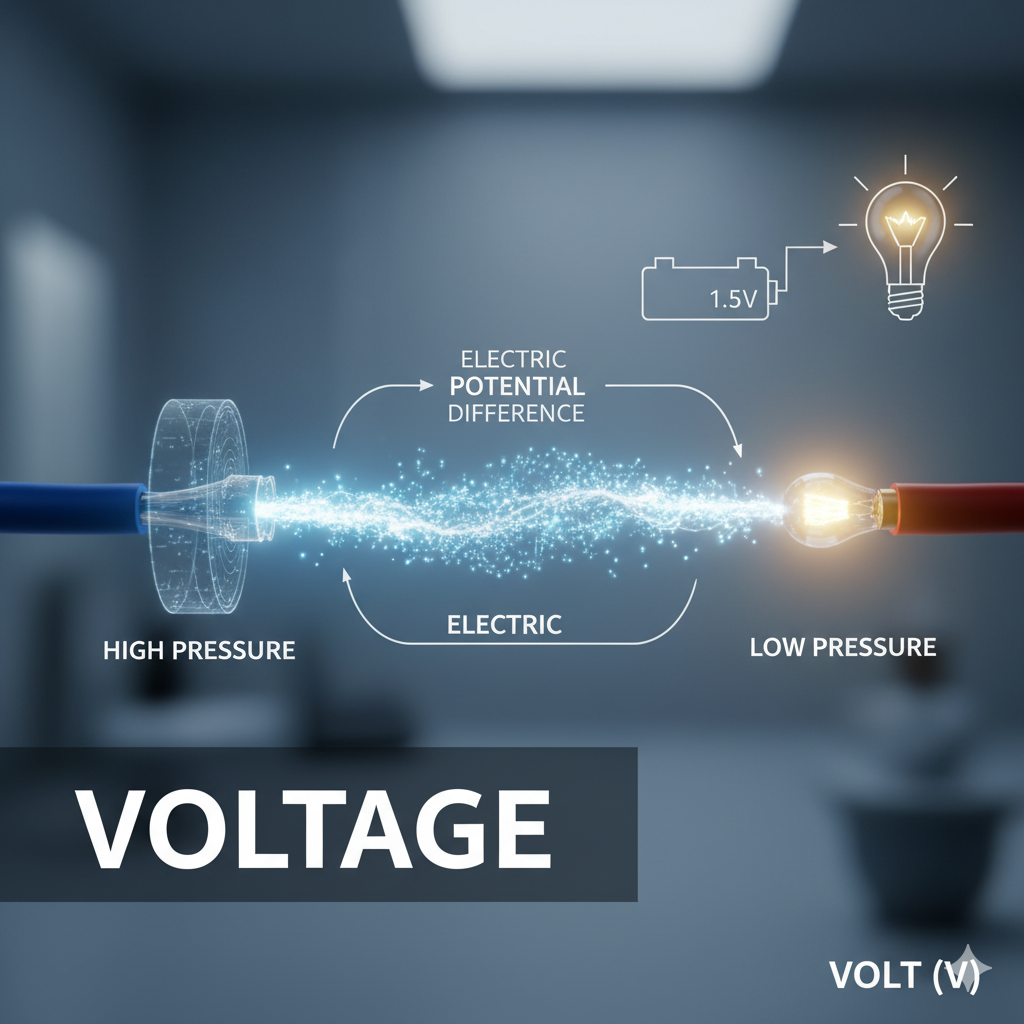
Electrical voltage, often referred to as electric potential difference or electromotive force (EMF), is the "pressure" or "force" that drives electric current in a circuit. It represents the amount of potential energy difference per unit charge between two points in an electric field.
Imagine a water pipe: voltage is analogous to the water pressure. Higher pressure means water flows with greater force. Similarly, a higher voltage means electrons are pushed or pulled with more force, resulting in a stronger electric current (given the same resistance).
The unit of voltage is the volt (V), named after Alessandro Volta. One volt is defined as one joule of energy per coulomb of charge. It's crucial for electrical circuits because it dictates how much work can be done by the flowing charge. Power sources like batteries and generators create a voltage difference across their terminals, enabling electrons to move and power devices. Understanding voltage is fundamental to designing, troubleshooting, and safely operating any electrical system.