
Welcome to Lulua-Dubai Company
Discover Quality, Experience Excellence
Discover Quality, Experience Excellence
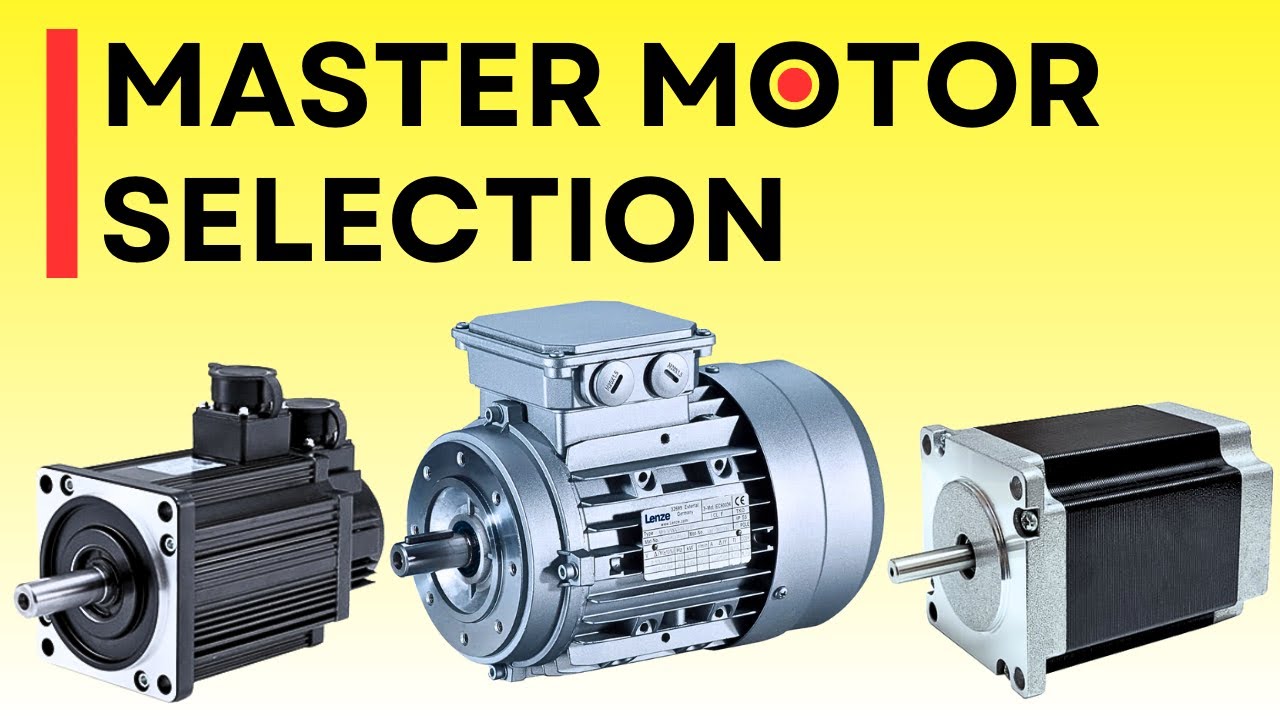
Selecting a suitable electric motor is a critical decision that impacts system performance, efficiency, longevity, and cost. It involves a systematic evaluation of the application's requirements, environmental conditions, and available power supply.
1. Understand the Load Requirements
The first and most important step is to thoroughly characterize the mechanical load the motor will drive.
Torque:
Starting Torque: The torque required to get the load moving from a standstill.
Running Torque: The torque required to keep the load moving at its desired speed.
Peak Torque: Any maximum torque demands during operation (e.g., during acceleration or sudden changes in load).
Speed:
Operating Speed (RPM): The desired rotational speed of the motor shaft.
Speed Range: If variable speed operation is required, define the minimum and maximum speeds.
Acceleration/Deceleration Rates: How quickly the motor needs to reach or change speed.
Duty Cycle:
Continuous Duty: Motor runs constantly for extended periods.
Intermittent Duty: Motor runs for specific periods, followed by rest periods (e.g., conveyor belts, hoists).
Cyclic Duty: Repetitive sequence of starts, stops, and load changes. This affects motor heating.
Inertia: The resistance of the load to changes in speed. High inertia loads require higher starting torque and can cause motor overheating if not properly matched.
2. Power Supply Characteristics
The available electrical power supply dictates the type of motor that can be used.
Voltage: The nominal voltage (e.g., 120V, 208V, 230V, 400V, 480V).
Phase: Single-phase or three-phase. Three-phase motors are generally more efficient and powerful for industrial applications.
Frequency: Typically 50 Hz or 60 Hz.
Current Limits: The maximum current the power supply can safely provide.
3. Motor Type Selection
Based on the load and power supply, choose the appropriate motor type.
AC Motors:
Induction Motors (Squirrel Cage/Wound Rotor): Most common for industrial applications due to robustness, low cost, and reliability. Suitable for constant speed or variable speed (with VFDs).
Synchronous Motors: Used for precise speed control, high efficiency, and power factor correction, especially in large applications.
DC Motors (Brushed/Brushless DC - BLDC):
Brushed DC: Excellent starting torque and variable speed control, but require maintenance for brushes.
BLDC: High efficiency, long life, and compact size, often used in robotics, EVs, and smaller applications where precise control is paramount. Require electronic controllers.
Stepper Motors: Used for precise positional control, often in open-loop systems (e.g., 3D printers, CNC machines). They move in discrete steps.
Servo Motors (AC or DC): High-performance motors used in closed-loop systems for precise speed, torque, and position control. Common in robotics and automation.
4. Environmental and Operational Considerations
Enclosure Type:
Open Drip-Proof (ODP): For clean, dry environments.
Totally Enclosed Fan-Cooled (TEFC): Most common, protects against dust and moisture.
Explosion-Proof (XP): Required for hazardous locations with flammable gases or dust.
Washdown Duty: For applications requiring frequent cleaning.
Mounting Configuration: Foot-mounted (F), C-face, D-flange, etc.
Temperature: Ambient temperature affects motor cooling.
Altitude: Higher altitudes reduce air density, impacting cooling.
Noise and Vibration: Important for residential or sensitive industrial environments.
Efficiency: High-efficiency motors (e.g., NEMA Premium Efficiency) save energy and reduce operating costs over time.
Cost: Initial purchase cost vs. long-term operating and maintenance costs.
5. Sizing and Protection
Horsepower (HP) or Kilowatt (kW): Select a motor with sufficient power to handle the load, including starting and peak demands, with a reasonable safety margin. Oversizing wastes energy; undersizing leads to overheating and premature failure.
Overload Protection: Motor starters, thermal overloads, and circuit breakers are essential to protect the motor from excessive current.
Variable Frequency Drives (VFDs): If variable speed or soft starting is needed, ensure the motor is "inverter-duty rated" to withstand the VFD's output.
By meticulously following these steps, engineers and technicians can select an electric motor that is perfectly matched to the application, ensuring optimal performance, reliability, and cost-effectiveness.